
Case study · Country market
Big Foot Market: a country store site that takes the order
A lakeside country store that sells groceries, coffee, pizza and three meals a day, and had to explain all of it on one small screen. We built a site that sorts the store into clear menus and takes orders for delivery and take-out.
The results for Big Foot Market
A country store that is also a kitchen
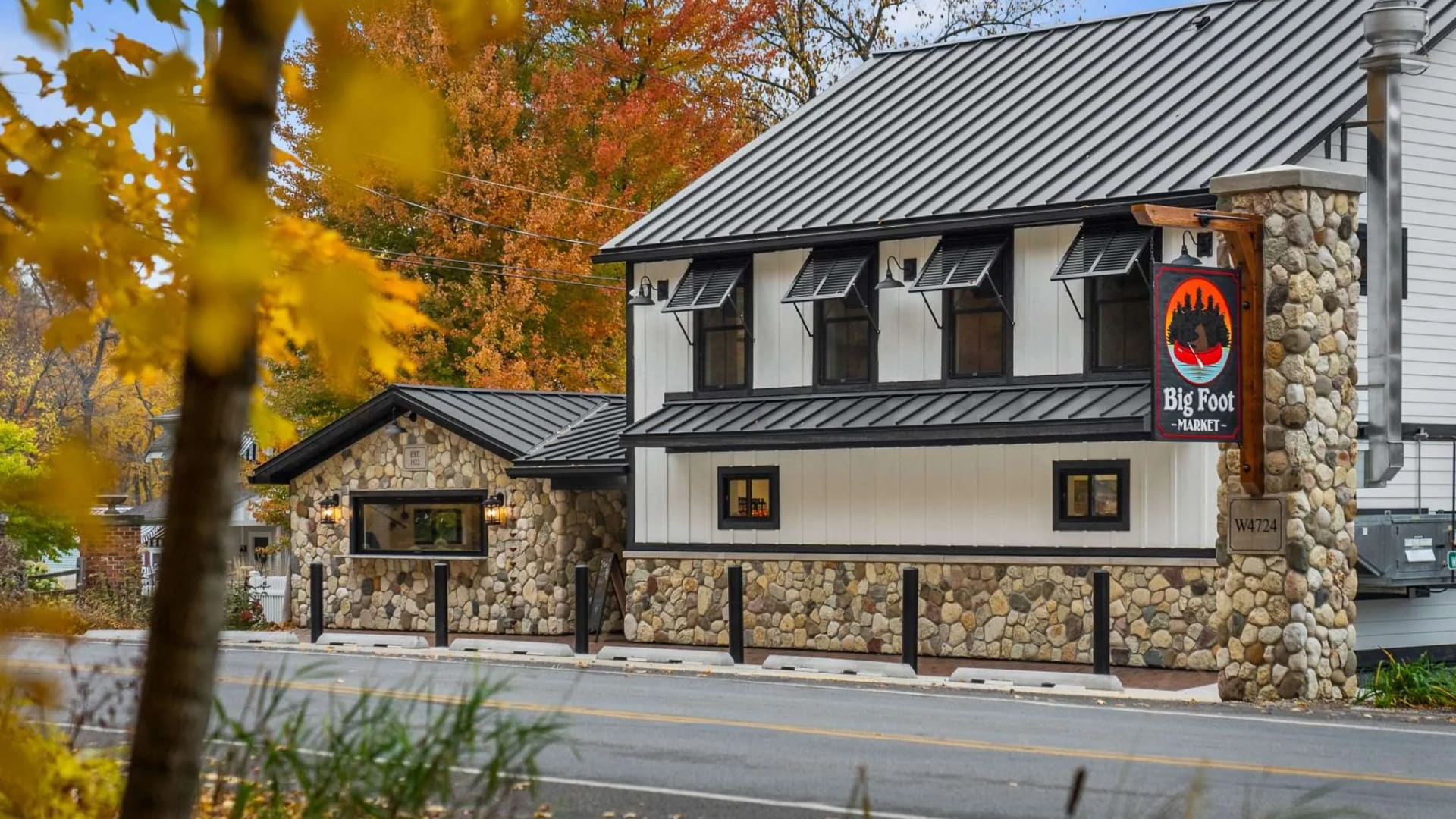
Big Foot Market sits on the south shore of Geneva Lake in Fontana, Wisconsin, and describes itself as the lake's oldest country store, serving the community since 1922. Under one roof it is a grocery, a coffee bar, a pizza kitchen, a liquor store and a gift shop, with breakfast, lunch and dinner menus built on ingredients from Wisconsin farms.
Its customers are a mix: year-round neighbors who need milk and a sandwich, and summer visitors who have a rental house, a boat and no plan for dinner. Both groups reach for a phone first, and both want to know the same thing. What do you have, and can I get it without standing in line?
The challenge: six businesses on one phone screen
A store that does this much is hard to describe quickly. Put everything on the home page and nothing stands out. Bury the menus two levels down and a hungry visitor goes back to the search results and picks the pizza place that showed its menu first.
Ordering was the other half. The market offers take-out and local delivery, and a mobile app besides. None of that helps if a customer cannot tell from the website which option covers their address, or where the order button is.
What the new site had to do:
- Sort a wide range of food, drink and groceries into menus a first-time visitor can follow.
- Make ordering for delivery or take-out reachable from every page.
- Show clearly who can get delivery and what it costs.
- Carry the store's long local history without slowing down someone who only wants lunch.
What we built
A responsive website arranged the way people use the store: decide what you are hungry for, see the menu, then order it or come in.


Menus split by what you came for.
Pizza, groceries, coffee, alcohol, breakfast, lunch and dinner each have their own entry in the navigation. A visitor who wants a cracker-style pizza is not asked to scroll past the grocery aisle to find it.
An Order Online button that never moves.
The order link sits in the header on every page and leads to the store's online ordering, which is tied to the same system the counter uses. The kitchen sees a web order the same way it sees one placed in person.
Delivery explained before checkout.
A delivery radius map and a plain statement of the flat delivery fee appear on the site, with a notice at the very top of each page. Customers know whether they are in range before they fill a cart.
A page for each kind of craving.
Breakfast, burgers, sandwiches, salads, soup, ice cream, the gift shop and the liquor store each have a page of their own. Someone searching for one of those near Lake Geneva can land on the page that answers that exact search.
The story and the setting.
An About page covers the market's history and its commitment to local farms, and a photo gallery shows the food and the building. For a visitor choosing between unfamiliar places, that is often what decides it.
The small jobs a store site has to do.
Directions, a phone number that dials on tap, a jobs page for seasonal hiring, an email sign-up for news and a feedback form. The site also points customers to the market's mobile app for repeat orders.
How the project ran
Discovery
We started with what the market sells, when it is busiest and which questions the staff answer most often by phone. Those questions set the order of the navigation.
Structure and design
We mapped the menus and category pages first, then designed the home page and one menu page around the store's photography and its country-store character.
Build and ordering
We developed the site, connected the online ordering and checked the full path from menu to order on phones as well as desktops.
Launch and updates
After launch the site keeps changing with the store: menu items, hours and seasonal notices are edited as the year goes on.
The results
The website now does the job a patient employee would do at the door. It tells a newcomer what the market is, shows the menu for the meal they want and takes the order, without anyone picking up the phone.
For the store, that means orders arrive already written down and paid for, and the counter staff spend the lunch rush making food instead of reading the menu aloud. Delivery questions that used to need a call are answered by the map.
It also gives the market a fair shot at visitors who have never heard of it. A family searching for pizza or groceries near the lake on a Friday night can find a page about exactly that, with an order button on it.
Google Lighthouse scores out of 100 for the live site, measured November 12, 2026.
Services on this project
Website Design
Page layouts designed around how this client's customers decide and buy.
Website Development
The build itself: fast, responsive pages and the custom features the project needed.
Frequently Asked Questions
What other shop and restaurant owners ask us about this project.
Usually, yes. Most point-of-sale systems offer online ordering that can be linked from or built into a website. For Big Foot Market the order button leads to ordering connected to the store's own system, so web orders reach the kitchen the same way counter orders do.
By sorting it the way customers think, not the way the stockroom is arranged. Big Foot Market's navigation is split into what a person came for: pizza, coffee, groceries, breakfast, lunch, dinner. Each has one page and one job.
A website comes first, because it is what people find in a search and it works without a download. An app suits regulars who order often. Big Foot Market has both, and the website introduces the app to customers once they know the store.
A page for each thing you sell is the starting point, since each one can match a specific search. Ongoing work on rankings is a separate service, and you can read how we handle it on our SEO page.
More projects like this
-
Epic Guide Service
A Green Bay fishing guide whose season is short and whose customers book from a phone, months ahead, without ever having met him. We built a site with a page for every trip and season, then brought in anglers with SEO and Google Ads.
View Case Study: Epic Guide ServiceView the Website: Epic Guide Service
-

Christmas Design Lighting
A holiday lighting installer whose work is packed into a few months. We designed the logo and a site where customers browse and book, with a blog of seasonal tips that keeps it useful between seasons.
-

River Falls Limo
A limo service that needed a simple, polished presence. We designed a logo and a one-page site with a gallery, the services and the contact details.

Tell us about your business
A few details are enough to start: what you do, who you want to reach and what you need help with.
Jason reads each request and replies in under 24 hours with next steps.