
By Jason Frelich · Published
What a Septic, Dumpster Rental or Hauling Website Needs to Bring in Calls
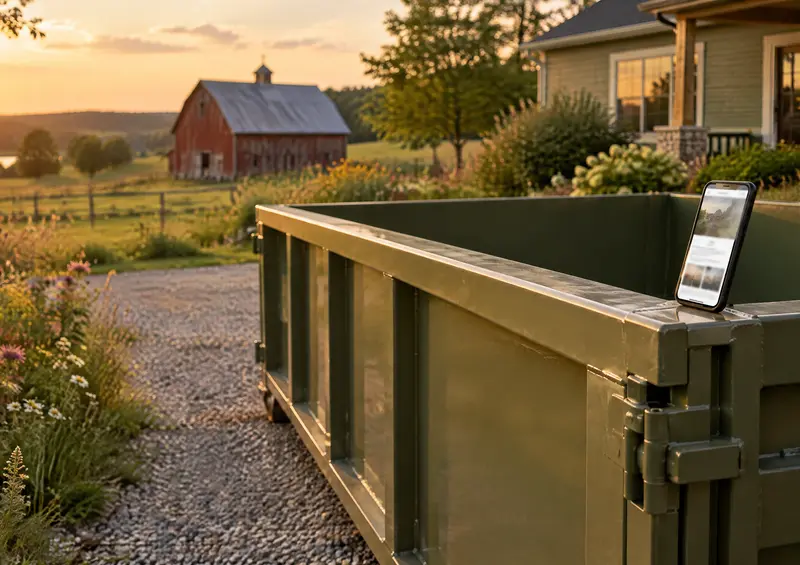
Nobody browses a septic company's website for fun. They have a tank that needs pumping, a renovation that needs a dumpster, or a wedding that needs portable toilets, and they want to know three things in about ten seconds: do you serve my town, what sizes or services do you offer, and how do I get one. A site that answers those three questions fast gets the call. A site that makes the visitor hunt sends them to the next listing.
We have built sites for dumpster rental, septic and hauling companies in Wisconsin, and the ones that bring in work share the same parts. Here they are, with what we did for River City Disposal and Toombs Septic Services and why.
1. The service area, on the homepage, by town name
The first question is always "do you come to me." Put the answer on the homepage: the counties and towns you serve, by name, in text that Google can read. Toombs Septic Services covers Northwest Wisconsin and the site says exactly where, so a search from any of those towns finds them. A map is a nice addition. A map alone is not enough, because Google cannot read a picture of a map and neither can a person in a hurry.
2. A page for every size and every service
River City Disposal rents dumpsters to homes, businesses and construction sites in River Falls, Wisconsin, and the site lays out every dumpster size and service with what each is for: a bathroom remodel, a roof tear off, a whole house cleanout. Customers arrive knowing what they want, which makes the call short and the quote accurate. The same goes for septic: pumping, inspections, repairs, portable toilets and hand washing stations each get a page, because each is a separate search and a separate customer.
3. A size guide with real photos
The question every dumpster company answers twenty times a day is "what size do I need." A size guide with a photo of each container on a real driveway, its dimensions, roughly what fits in it, and the jobs it suits saves your phone time and gives Google a page that ranks for "what size dumpster for a kitchen remodel." Use your own containers and your own trucks. Customers want to see what will show up at their house.
4. A rental or service request form that works on a phone
Many customers call. Many others are planning at 10pm and will not. For them, a request form on every page: name, phone, address, the size or service, the dates, and a place for a note. You confirm the price and the delivery window by phone or email. River City Disposal's site puts a way to get in touch on every page, and that is the rule: never make a customer go looking for it.
5. Click to call at the top of every page
Most visitors are on a phone, often standing in the driveway looking at the problem. The number belongs at the top of every page, large enough to tap, and it dials when tapped. This is the single most important element on a service company's site, and it is astonishing how many sites hide it on a contact page.
6. A page for each town you want to be found in
Service area pages are how a company in a rural county gets found across it. A homeowner in a small town searches for septic service in that town, and Google shows the page about that town. Each page should be about the place: the kind of properties there, the services you do most there, a job you did there, and how far you are from it. Pages that are copies of each other with the town name swapped do not rank and do not convince anyone.
7. Licensing, insurance and what you do with the waste
Customers in this industry have real questions about trust: are you licensed, are you insured, where does it go. Toombs Septic's licensing is front and center on the site. River City Disposal explains its recycling commitment. Put the license number, the insurance and the disposal practices where a careful customer will find them, because the careful customer is the one who calls back for the next job.
8. Reviews that mention the town
Google reviews decide how you rank on the map, and reviews that mention the town and the service ("pumped our tank in Hudson the same day") are the ones that move it. Ask after every job, by text, with the direct link. We have a script in how to get more Google reviews. Put the best ones on the site with the customer's first name and town.
9. Seasonal pages and a banner you can change
This industry runs on seasons: spring cleanouts, summer events, fall pumping before the ground freezes. Each seasonal service gets a page, and the homepage gets a banner that changes with the season. On our hosting and maintenance plan, you text the change and it is made in under 48 hours, so the site keeps up without you learning an editor.
10. A Google Business Profile that matches
For a service area business, the profile is the map listing, and it ranks on three things you control: a complete profile with the service area set to your towns, the same name, address and phone number everywhere you are listed, and a steady flow of reviews. We set up and tune the profile as part of every site we build in this industry, and ongoing local SEO starts at $600 a month for owners who want to keep pushing.
The hauling version
Toombs Trucking hauls grain and ag lime in Wisconsin's farm country, and the same principles apply with different words: the services listed plainly, the area covered by name, a way to schedule, and the case for safety and reliability made up front. Whatever you haul, pump or rent, the customer's three questions are the same.
What it costs
A custom site built around these parts starts at $5,000, or $200 a month on the Small Business plan with the writing, hosting and changes included. Grow Together asks for nothing up front and is paid 10% of the sales the site brings in. Most sites launch in 4 to 8 weeks. The full picture of what drives the price is in how much a website costs, and the list of what any service company's site needs is in what a contractor website should include.
Run your current site through the free website grader first if you have one. Then tell us what you haul, pump or rent and the towns you cover. That is enough to start, and Jason replies in under 24 hours.
Frequently asked questions
What waste and septic owners ask before they build a site.
They can request one. A rental request form takes the size, the delivery address and the dates, and you confirm the price by phone or email. River City Disposal's site lists every size and service, so most customers already know what they want when they ask.
For every town you want to be found in, yes. Toombs Septic lists its service areas across Northwest Wisconsin, and a page about a town is what Google shows when someone there searches for septic service. Write each one about that place so they are not copies.
A custom site built around calls and rental requests starts at $5,000, or $200 a month on the Small Business plan with writing, hosting and changes included. Grow Together asks for nothing up front and is paid 10% of the sales the site brings in.
Your trucks, your containers, your crew and your yard, taken with a phone. A clean dumpster on a real driveway in your county beats any stock photo and tells a customer what will show up at their house.
A complete Google Business Profile with your service area set to the towns you cover, matching name, address and phone everywhere you are listed, the town pages on the site, and reviews that mention the town. Ongoing local SEO starts at $600 a month.
Yes. Portable toilets for summer events, spring cleanouts, fall septic pumping: each gets its own page, and on our maintenance plan a seasonal banner or price change is made in under 48 hours when you text it over.

Lead Web Designer and Developer at Lackey Designs. The company has been around since 2006, and Jason brings 20 years of design and development experience to every site he builds. More about Jason

How does your current site score?
Get a free 0–100 grade for speed, SEO, accessibility, security, and whether ChatGPT and other AI tools can find you. No email required.
Rather have it done for you?
Lackey Designs builds, hosts and markets websites for small businesses, from $200/month or $0 upfront with Grow Together. Tell us about your business and we'll send a free estimate.